
Slot machines are, by a wide margin, the most popular casino game in the world — both online and in physical casinos — generating more revenue than every table game combined in most markets. Yet despite their popularity, few players actually understand what’s happening behind those spinning reels. This guide demystifies how slots really work, separating genuine mechanics from common misconceptions.
The Core Mechanic: Random Number Generators
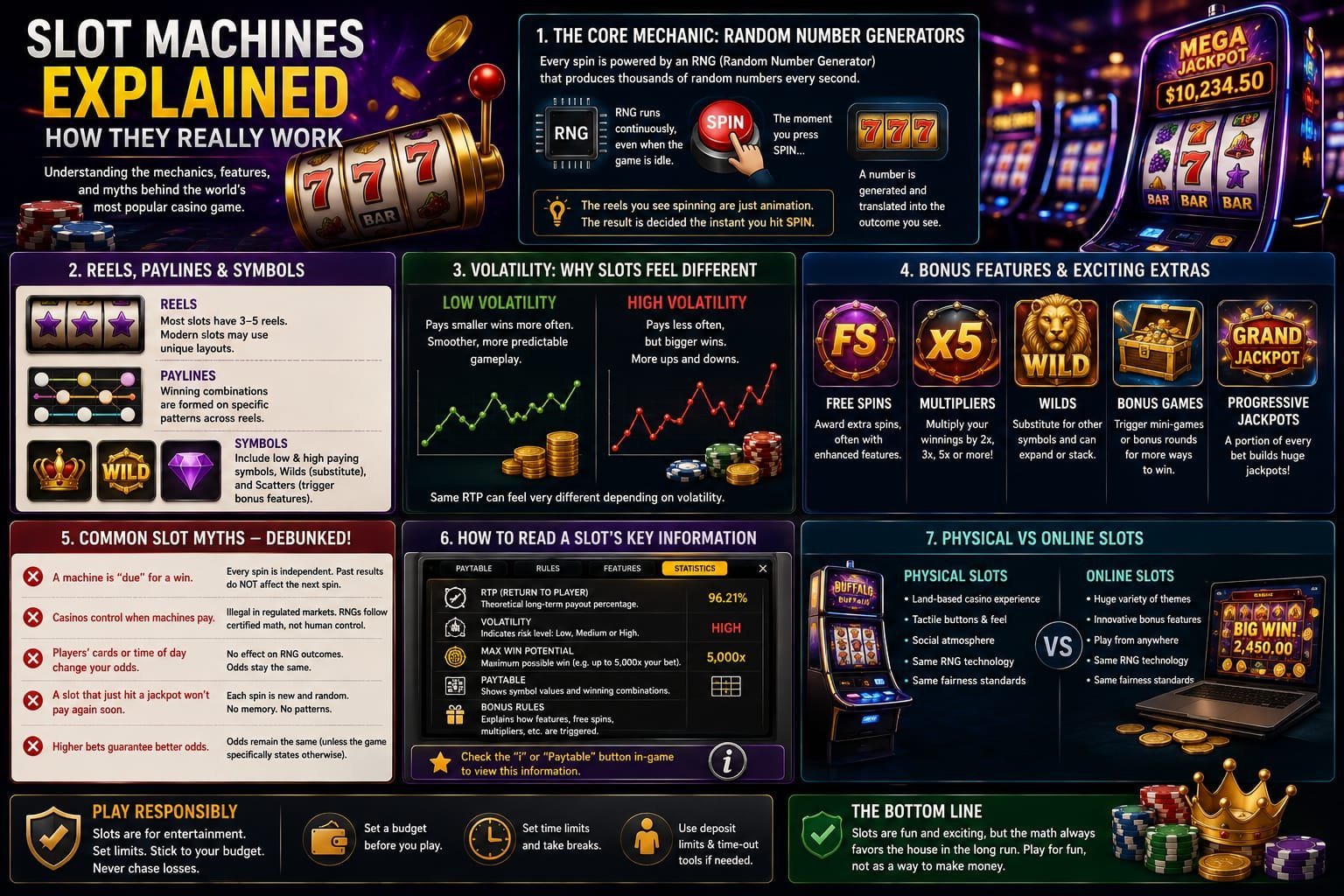
Every legitimate digital slot machine, whether online or in a physical casino, is powered by a Random Number Generator (RNG) — a piece of certified software that continuously generates random sequences of numbers, even when the machine isn’t actively being played. The moment you press “spin,” the RNG generates a result at that exact instant, which is then translated into the specific symbols and outcome you see displayed on the reels.
This is a crucial point that surprises many players: the visual spinning of the reels is essentially theatrical presentation layered on top of a result that’s already been determined the instant you hit spin. The animation exists to make the game engaging and suspenseful, but it doesn’t influence or represent any ongoing “process” that could be predicted or manipulated.
Reels, Paylines, and Symbols
Reels: Traditional slots feature 3-5 vertical reels, though modern video slots sometimes use unconventional layouts, including cluster-pay or “Megaways” style mechanics with variable reel configurations.
Paylines: These are the specific patterns across the reels that determine winning combinations — traditionally horizontal lines, though modern slots often include diagonal, zigzag, or “ways to win” systems that dramatically increase the number of possible winning combinations.
Symbols: Each slot has its own set of symbols with different payout values, typically including standard symbols (lower value), premium symbols (higher value), wild symbols (which substitute for other symbols to complete winning combinations), and scatter symbols (which often trigger bonus features regardless of their position on the reels).
Why Slots Feel Different From Each Other: Volatility
Even though all legitimate slots use certified RNGs, individual games can feel wildly different to play — some pay out small wins frequently, while others go long stretches without paying anything before delivering a large win. This difference comes down to volatility (also called variance), a designed characteristic that determines the risk/reward profile of a specific game.
Low volatility slots are programmed to pay out smaller amounts more frequently, creating a smoother, more predictable playing experience with less dramatic swings in your balance over a session.
High volatility slots pay out less often, but the wins tend to be larger when they occur, creating a more unpredictable, higher-risk playing experience.
Neither approach is inherently “better” — they simply suit different playing styles and risk tolerances, and understanding a slot’s volatility rating (often available in the game’s information screen or through independent review sites) can help you choose games that match your preferences and bankroll.
Understanding Paylines vs “Ways to Win”
Traditional slots use fixed paylines — specific patterns across the reels that must align with matching symbols to create a win. Modern slots increasingly use “ways to win” systems (like the popular Megaways mechanic), where wins are calculated based on matching symbols appearing on adjacent reels, regardless of their vertical position — dramatically increasing the number of possible winning combinations, sometimes into the tens of thousands, which changes both the game’s feel and its underlying mathematics.
Bonus Features: Free Spins, Multipliers, and More
Modern video slots typically include bonus features designed to add variety and excitement beyond the base game:
Free spins: Usually triggered by landing a specific number of scatter symbols, awarding additional spins, often with enhanced features like multipliers or expanded reels.
Multipliers: These increase the value of a win by a specified factor (2x, 3x, and sometimes much higher), either applied automatically or as part of a bonus round.
Wild symbols: Substitute for other symbols to help complete winning combinations, sometimes with additional functions like expanding to fill an entire reel.
Bonus rounds/mini-games: Separate interactive features, often triggered by specific symbol combinations, that can offer additional ways to win beyond the standard spinning mechanic.
Progressive jackpots: A portion of every wager across a network of linked machines (sometimes across multiple casinos) contributes to a growing jackpot prize pool, which continues increasing until a player hits the specific winning combination required to trigger it.
Common Slot Machine Myths, Debunked
Myth: A machine is “due” for a win after a long losing streak.
Reality: Each spin is an entirely independent event, generated fresh by the RNG with no memory of previous outcomes. A machine that hasn’t paid out in hours has exactly the same odds on its next spin as one that just paid out a jackpot.
Myth: Casinos can remotely control when a specific machine pays out.
Reality: In regulated markets, this would be illegal and is actively monitored against through licensing requirements and independent auditing. Certified RNGs operate according to their programmed mathematical parameters, not real-time manual manipulation.
Myth: Playing with a players’ card or during certain times of day changes your odds.
Reality: There is no legitimate mechanism by which loyalty program membership or time of day affects RNG-based outcomes on a certified slot machine.
Myth: A slot that just paid a big jackpot won’t pay again for a long time.
Reality: Again, each spin is statistically independent. The RNG has no concept of “recently paid out,” and previous results have zero influence on future outcomes.
Myth: Higher bets guarantee better odds of winning.
Reality: While some slots do offer proportionally larger potential payouts at higher bet levels, the underlying probability of hitting a winning combination generally remains the same regardless of bet size, unless a game specifically states otherwise in its rules.
How to Read a Slot’s Key Information
Most reputable online slots provide an information or “paytable” screen containing useful details:
- RTP (Return to Player): The theoretical long-run payout percentage
- Volatility rating: Often described as low, medium, or high
- Maximum win potential: Expressed as a multiplier of your bet (e.g., “up to 5,000x your stake”)
- Paytable: Shows the value of each symbol and winning combination
- Bonus feature rules: Explains how free spins, multipliers, and other features are triggered and function
Taking a moment to review this information before playing a new slot can help you understand what you’re actually engaging with, rather than jumping in blind.
Physical vs Online Slots: Any Real Differences?
Physical slot machines in land-based casinos and online slots both rely on certified RNG technology, and in regulated markets, both are subject to similar fairness testing requirements. Online slots often offer a wider variety of themes, bonus features, and volatility options since digital development allows for more experimentation than manufacturing physical cabinets. Physical machines, meanwhile, offer the tactile, social casino floor experience that online play doesn’t replicate.
A Note on Responsible Play
Slots are specifically designed to be engaging, fast-paced, and immersive — which is part of what makes them so popular, but also part of why they warrant particularly mindful play. The rapid pace of spins, combined with features like near-miss animations and celebratory win sounds even on relatively small payouts, are deliberate design elements intended to enhance engagement. Set a clear budget and time limit before you start playing, treat any losses as the cost of entertainment rather than money to “win back,” and use deposit limits or time-out tools if you find it difficult to stick to your intended limits.
Final Thoughts
Slot machines are far more sophisticated than they might appear at first glance — built on certified random number generation, carefully calibrated volatility settings, and increasingly complex bonus mechanics designed to create varied, engaging experiences. Understanding how they actually work, and debunking the myths that surround them, allows you to approach the game with realistic expectations rather than misconceptions about patterns, timing, or “due” wins that simply don’t exist in properly regulated slot machines.